SLO

About the project At the School of Cohesion

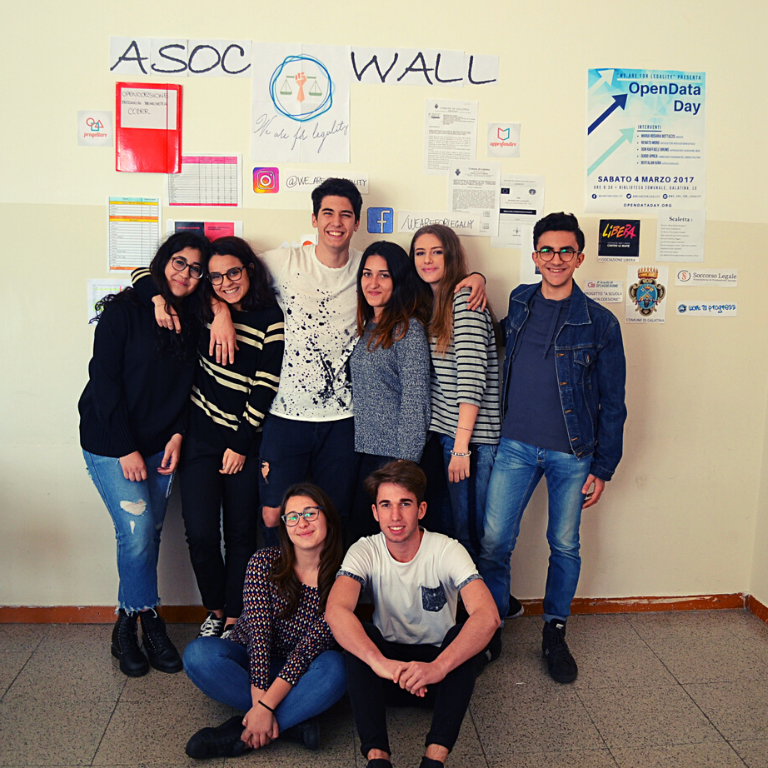
At the School of Open Cohesion (ASOC) is an innovative interdisciplinary programme designed for all types of secondary schools with the aim of promoting civil-society engagement in the monitoring of public finances by using open data and information and communication technologies.

The ASOC education programme combines civic education, digital and statistical skills, data journalism, and horizontal skills such as critical thinking, problem-solving, teamwork, interpersonal and communication skills and integrates them into the regular education programme. 

In the ASOC project, students develop a civil society monitoring project that utilises public data and information on EU-funded projects in their local environment to assess the effectiveness and efficiency of Cohesion Policy investments. Research results are then published. The students also actively include citizens in their research work. 

The education programme is delivered in a hybrid manner, combining project-based learning with asynchronous learning typical for massive open online courses (MOOCs), available via webinars. Students are encouraged and guided by teachers, who involve them in group work and online interaction with the project team. The course is divided into four learning sets, which are implemented throughout the school year. For the 2023/2024 school year, the ASOC Slovenia programme is coordinated by the PiNA Cultural Education Association on behalf of Ministry of Cohesion and Regional Development

Set 1

The activity begins with an introduction to the concept of civil society monitoring. Students then select a publicly funded Cohesion Policy project that is located in the area. This project serves as the focus of their monitoring efforts.
Next, students define a research question related to the selected project. They are organised into working groups within their classes, with specific roles and tasks assigned to each member.
The groups gather and analyse available information about the project. They reconstruct the administrative process, including the procedures and decisions that led to the project’s approval and implementation. Finally, students identify the public and private entities involved in carrying out the project.

Set 2

Getting familiar with the data, defining and understanding the concept of open data, analysing data related to the chosen topic, developing an indicator based on the data collected, and understanding the workflow and methods of data journalism.

Set 3

Monitoring the progress of the selected project through on-site visits, interviews with entities that implemented the project and meetings with institutions. Preparation of a detailed civil society monitoring report for the Monithon platform.

Set 4

Learning about communication techniques and methods, planning and implementing an awareness-raising and active citizen participation campaign and presenting the monitoring results. Organisation of a public event and involvement of the relevant community for the follow-up of the selected project.

About the Italian model

The project is based on the Italian educational programme A Scuola di OpenCoesione, an innovative educational model and method which is internationally recognised as a good practice.

The project is part of a broader initiative OpenCohesion, a national open programme about Cohesion Policy in Italy, which is financed by the EU and with national resources and coordinated by the programme analysis and evaluation team under the Cohesion Policy Department of the Presidency of the Council of Ministers.
The ASOC project was implemented in cooperation with the Ministry of Education and the Representation of the European Commission in Italy and was financially supported with Cohesion Policy funds.


Dijaki v šoli kohezije

Important links

Hi, my name is EMA, how can I help you?

Skip to content
Evropska sredstva
Privacy Overview

This website uses cookies so that we can provide you with the best user experience possible. Cookie information is stored in your browser and performs functions such as recognising you when you return to our website and helping our team to understand which sections of the website you find most interesting and useful.